Selecting the right AI chatbot for your e-commerce store directly impacts customer satisfaction, operational efficiency, and revenue growth. This guide covers essential criteria for evaluating chatbot solutions, proven deployment strategies, and actionable recommendations to optimize your online support in 2026. You’ll discover how to balance automation with human touch while maintaining compliance and measuring success effectively.
Table of Contents
- How To Choose The Right AI Chatbot For Your E-Commerce Store
- Benefits Of AI Chatbots In Online Customer Service
- Personalization As A Best Practice
- Human Escalation: When And How To Step In
- Multi-Channel Deployment And Integration
- GDPR Compliance And Privacy Best Practices
- Integration And Setup Best Practices
- Measuring And Optimizing Chatbot Performance
- Pricing Models And Scalability Considerations
- Situational Recommendations: Choosing The Best Approach For Your Store
- Enhance Your E-Commerce Customer Service With Agenized.com
Key takeaways
| Point | Details |
|---|---|
| Selection criteria | Prioritize response speed, customization, platform integration, multi-channel support, and GDPR compliance when choosing chatbot solutions. |
| Personalization impact | Tailored messaging based on customer history and behavior can boost conversions by 20% and build stronger engagement. |
| Human escalation | Strategic handoffs to human agents reduce frustration and achieve 33% faster resolution times for complex issues. |
| Multi-channel deployment | Expanding chatbot presence across web, WhatsApp, and Instagram increases customer engagement by 25%. |
| Performance measurement | Track CSAT scores, resolution rates, and automation levels to continuously optimize chatbot effectiveness and ROI. |
How to choose the right AI chatbot for your e-commerce store
Selecting an AI chatbot requires careful evaluation of features that align with your business needs and customer expectations. The right choice transforms support operations while the wrong one wastes resources and frustrates customers.
Start by assessing response speed and 24/7 availability. Customers expect instant answers, and delays damage satisfaction scores. Research shows that response speed directly correlates with improved customer retention.
Customization capabilities determine how well the chatbot reflects your brand voice and adapts to different customer scenarios. Look for solutions offering flexible conversation flows, personalized greetings, and the ability to handle product-specific queries. Generic responses feel robotic and drive customers away.
Platform integration matters significantly for operational efficiency. Your chatbot should connect seamlessly with your existing e-commerce system, whether you’re running Shopify, WooCommerce, or Magento. Native integrations reduce setup time and minimize technical headaches.
Multi-channel support expands your reach beyond your website. Modern customers interact across WhatsApp, Instagram, Facebook Messenger, and email. A chatbot that operates consistently across these channels captures more engagement opportunities and meets customers where they already spend time.
GDPR compliance protects both your customers and your business. Verify that any chatbot solution implements proper data handling, provides transparent privacy policies, and includes user consent mechanisms. Choosing SaaS AI agents with built-in compliance features saves legal headaches later.
Pro Tip: Create a scorecard rating each chatbot solution across these five criteria before making your final decision. This structured approach prevents emotional purchasing and ensures you select based on actual business needs.
Benefits of AI chatbots in online customer service
AI chatbots deliver measurable improvements in customer experience and operational efficiency when implemented correctly. The data supporting their adoption has become compelling in 2026.
89% of customers prefer chatbots for instant responses compared to waiting on hold or for email replies. This preference stems from immediate problem resolution and the elimination of frustrating wait times. When customers get answers in seconds instead of hours, satisfaction naturally increases.
Operational costs drop significantly with chatbot deployment. AI handles routine inquiries like order status, return policies, and product availability without human intervention. This frees your support team to focus on complex issues requiring empathy and creative problem-solving.
Revenue impact extends beyond cost savings. Customer engagement AI benefits include higher conversion rates through proactive product recommendations and abandoned cart recovery. Chatbots identify purchasing intent and guide customers toward checkout with contextual suggestions.
24/7 availability meets global customer expectations. Your store never closes when AI handles support around the clock. International customers shopping from different time zones receive the same quality service as local buyers during business hours.
Measurable satisfaction improvements appear within weeks of proper chatbot deployment. Tracking metrics like first-contact resolution and customer effort scores reveals concrete gains. Stores report reduced ticket volumes and faster average handling times once chatbots manage initial triage effectively.
“Implementing AI chatbots reduced our support ticket volume by 40% while customer satisfaction scores increased by 15 points. The ROI became clear within the first quarter.” — E-commerce Operations Manager
Personalization as a best practice
Personalized chatbot interactions separate exceptional customer experiences from mediocre ones. Generic automation feels cold, while tailored responses build genuine connections and drive measurable results.

Leverage customer purchase history and browsing behavior to customize every interaction. When a returning customer asks about products, reference their previous orders and suggest complementary items. This contextual awareness demonstrates that you recognize them as individuals, not just transaction numbers.
Dynamic content adaptation keeps conversations relevant. If someone abandons their cart, the chatbot should acknowledge the specific products left behind and address common objections like shipping costs or sizing concerns. Generic “complete your purchase” messages lack the personal touch that converts browsers into buyers.
Personalized messaging boosts conversions by 20% because it speaks directly to customer needs and preferences. This isn’t just about inserting names into templates. True personalization analyzes behavior patterns and adjusts recommendations accordingly.
Contextual product recommendations outperform random suggestions dramatically. When a customer inquires about running shoes, the chatbot should factor in their previous athletic wear purchases, stated preferences, and current sale items. This targeted approach feels helpful rather than pushy.
Balance automation with human touch points. Even personalized chatbots have limits when handling emotional concerns or complex customization requests. Using AI chatbots to boost sales works best when you recognize these boundaries and transition smoothly to human agents.
Pro Tip: Segment your customer base by purchase frequency, average order value, and product categories. Program your chatbot to adjust its tone and recommendations based on these segments for maximum personalization impact.
Human escalation: when and how to step in
Knowing when to transition from chatbot to human agent prevents customer frustration and maintains service quality. The handoff process requires careful planning and clear triggers.
Set specific escalation criteria based on conversation complexity, customer sentiment, and inquiry type. Financial disputes, technical troubleshooting beyond basic steps, and emotional complaints should route immediately to human agents. Chatbots excel at information delivery but struggle with nuanced problem-solving.
Human escalation achieves 33% faster resolution compared to forcing customers through endless chatbot loops. This speed advantage comes from human agents’ ability to understand context, make judgment calls, and deviate from scripts when necessary.
Smooth handoff workflows preserve conversation history and customer context. Nothing frustrates customers more than repeating information they already provided to the chatbot. Your system should transfer the entire conversation thread, customer profile, and relevant order details to the human agent instantly.
Combine AI efficiency with human empathy for superior outcomes. Chatbots handle initial data collection, verify customer identity, and gather relevant account information. Human agents then step in with full context to resolve the core issue quickly.
Monitor escalation metrics to optimize trigger timing. If 60% of escalated conversations could have been resolved by improving chatbot responses, update your knowledge base and conversation flows. Support agent escalation examples reveal common patterns worth addressing.
Pro Tip: Train your chatbot to recognize frustration signals like repeated questions, negative sentiment words, or requests to speak with a human. Proactive escalation before customers demand it shows respect for their time and improves satisfaction scores.
Multi-channel deployment and integration
Deploying AI chatbots across multiple customer touchpoints maximizes engagement and captures support requests wherever customers prefer to interact. This omnichannel approach requires strategic planning and robust integration.
Website chat widgets remain the foundation, but expanding to WhatsApp, Instagram, Facebook Messenger, and email multiplies your support capacity. Multi-channel chatbot deployment increases engagement by 25% because customers choose their preferred communication platform rather than adapting to yours.
Native e-commerce platform integrations streamline operations and reduce technical complexity. Shopify integration features enable chatbots to retrieve order information, process returns, and apply discount codes without custom API development. This tight coupling eliminates data sync issues and accelerates deployment.
Consistent experience across channels builds trust and reduces confusion. Your chatbot should maintain the same capabilities, tone, and access to customer data whether someone contacts you via Instagram DM or website chat. Fragmented experiences force customers to repeat information and damage credibility.
Data synchronization challenges emerge when managing multiple channels. Customer interactions on WhatsApp must update the same database as website conversations to prevent conflicting information. Multi-channel AI support for ecommerce requires centralized data management and real-time updates.
| Integration Type | Deployment Speed | Maintenance Effort | GDPR Compliance | Best For |
|---|---|---|---|---|
| Native CMS Plugin | Fast (1-2 days) | Low | Built-in | Shopify, WooCommerce stores |
| Third-party Platform | Medium (1-2 weeks) | Medium | Variable | Multi-channel needs |
| Custom API Build | Slow (4-8 weeks) | High | Manual setup | Unique requirements |
Platform comparison reveals that native integrations offer the fastest path to deployment while third-party solutions provide broader channel coverage. Custom builds make sense only for highly specialized workflows that existing solutions cannot support.
GDPR compliance and privacy best practices
Privacy concerns dominate customer thinking when interacting with AI chatbots. Building trust through transparent data practices and legal compliance separates reputable businesses from risky ones.
80% of users worry about privacy when chatting with online bots. This anxiety stems from unclear data usage, lack of consent mechanisms, and high-profile data breaches. Addressing these concerns upfront prevents abandonment and builds confidence.
Data minimization principles require collecting only information necessary for the specific interaction. Don’t ask for phone numbers when email suffices for order updates. Every additional data point increases privacy risk and regulatory obligations.
Transparent data usage policies must appear before customers share personal information. Your chatbot should explain how you’ll use their data, who has access, and how long you’ll retain it. Vague privacy statements fail GDPR requirements and erode trust.
Explicit consent mechanisms give customers control over their information. Implement clear opt-in checkboxes for marketing communications and data retention. Pre-checked boxes and buried consent in terms of service violate GDPR and risk substantial fines.
Data deletion options empower customers to exercise their right to be forgotten. Your chatbot should include easy pathways for customers to request data removal. Automated processing of these requests reduces administrative burden while demonstrating respect for privacy rights.
Security best practices protect customer information from breaches and unauthorized access. Encrypt data in transit and at rest, implement access controls limiting who can view conversation histories, and conduct regular security audits. Prevention costs less than breach remediation.
Integration and setup best practices
Efficient chatbot deployment balances speed with thoroughness. Rushing setup creates problems, while perfectionism delays value delivery.
Visual widget builders enable 50% faster deployment compared to code-based implementations. Drag-and-drop interfaces let non-technical team members design conversation flows, customize appearance, and test functionality without developer assistance. This democratization accelerates iteration cycles.
Collaboration tools reduce setup errors by 35% through shared workspaces where marketing, support, and technical teams coordinate chatbot content and behavior. Version control prevents conflicting updates, and approval workflows ensure quality before publishing changes.
Direct integrations cut chatbot response time by 60% versus solutions requiring middleware or API bridges. When your chatbot connects natively to your e-commerce platform, it retrieves order details, inventory levels, and customer data instantly. Third-party connectors introduce latency that frustrates customers.
Iterative testing prevents embarrassing public failures. Deploy your chatbot to a small customer segment first, monitor conversations, and identify gaps in knowledge or awkward response patterns. Step-by-step AI agent workflow guidance helps structure this testing phase effectively.
Staff training ensures smooth operation once the chatbot goes live. Your support team needs to understand escalation triggers, how to access chatbot conversation histories, and when to override automated responses. This knowledge prevents internal confusion and maintains service quality.
Pro Tip: Create a chatbot runbook documenting common issues, escalation procedures, and update processes. This reference guide helps new team members get up to speed quickly and serves as a troubleshooting resource during incidents.
Measuring and optimizing chatbot performance
Data-driven optimization transforms adequate chatbots into exceptional ones. Regular measurement identifies improvement opportunities and validates investment decisions.
Customer satisfaction scores reveal how customers perceive chatbot interactions. Send brief surveys after conversations asking customers to rate their experience. Track trends over time and investigate sudden drops that indicate problems requiring attention.
Net promoter scores measure whether customers would recommend your store based on their support experience. High NPS correlates with repeat purchases and word-of-mouth growth. Chatbot interactions significantly influence this metric.
Resolution rates show how often the chatbot successfully addresses customer needs without human escalation. Low resolution rates suggest knowledge gaps, unclear conversation flows, or overly complex customer inquiries that require chatbot enhancement or different handling strategies.
Average handling time indicates efficiency improvements. As your chatbot learns and you optimize responses, handling time should decrease while resolution rates increase. This combination signals effective performance gains.
Automation levels versus human intervention rates reveal cost savings and scalability. Calculate the percentage of conversations fully handled by the chatbot versus those requiring human assistance. This metric guides staffing decisions and highlights areas for further automation.
Support team productivity improves when chatbots handle routine inquiries. Measure tickets per agent and compare periods before and after chatbot deployment. Productivity gains validate ROI and justify expanded chatbot capabilities.
Pricing models and scalability considerations
Cost-effective chatbot selection requires understanding pricing structures and how they align with business growth. The cheapest option now might become expensive as you scale.
Free tiers let small stores test chatbot functionality with basic features and limited conversation volumes. These plans typically support one channel, offer standard templates, and cap monthly interactions. They work well for stores handling fewer than 500 conversations monthly.
Tiered pricing unlocks advanced features like personalization engines, multi-language support, and priority customer service. Mid-sized stores benefit from investing in these capabilities as customer volume grows. The per-conversation cost often decreases at higher tiers, improving unit economics.
| Plan Type | Monthly Cost | Conversations Included | Channels | Personalization | Human Escalation | Best For |
|---|---|---|---|---|---|---|
| Free | $0 | 500 | 1 | Basic | No | Testing, micro-stores |
| Starter | $49-99 | 2,000 | 3 | Limited | Yes | Growing stores |
| Professional | $199-399 | 10,000 | Unlimited | Advanced | Yes | Established stores |
| Enterprise | Custom | Unlimited | Unlimited | Full | Yes | Large operations |
Scalability depends on how pricing adjusts with growth. Some platforms charge per conversation while others use seat-based pricing. Conversation-based models align costs with actual usage, while seat-based pricing provides predictable budgeting.
ROI calculations should factor in support team salary savings, increased conversion rates, and customer lifetime value improvements. A chatbot costing $200 monthly that reduces support staff needs by 10 hours weekly generates clear positive returns.
Feature availability varies significantly across pricing tiers. Multi-channel support, advanced analytics, and custom integrations often require premium plans. Understand which features drive your business value and select plans accordingly.
Situational recommendations: choosing the best approach for your store
Different store sizes and customer demographics require tailored chatbot strategies. One-size-fits-all approaches waste resources and miss optimization opportunities.
Small stores with limited budgets should start with free-tier chatbots focusing on essential support functions. Prioritize order tracking, basic product questions, and store hours over advanced personalization. This foundation delivers immediate value while you learn chatbot management.
Mid-size stores benefit from investing in personalization and human escalation capabilities. At this scale, conversion rate improvements from personalized recommendations justify higher subscription costs. Your customer base is large enough to generate meaningful data for optimization.
Large stores and multinational operations require multi-channel, multilingual chatbot solutions with enterprise-grade features. Support ticket volumes justify comprehensive automation, and diverse customer demographics demand localized experiences. Integration with CRM systems and analytics platforms becomes essential.
Customer demographic considerations influence chatbot tone and channel priorities. Younger audiences prefer Instagram and WhatsApp interactions, while older customers favor email and website chat. Match your channel deployment to where your customers actively engage.
Regularly reassess your chatbot strategy as business conditions change. What works at 100 orders daily needs adjustment at 1,000 daily orders. Growth phases require capability upgrades, additional channels, and enhanced personalization to maintain customer satisfaction.
Enhance your e-commerce customer service with agenized.com
Implementing these best practices becomes straightforward with the right platform supporting your efforts. Agenized platform features provide the tools needed to deploy AI chatbots that truly enhance customer service.
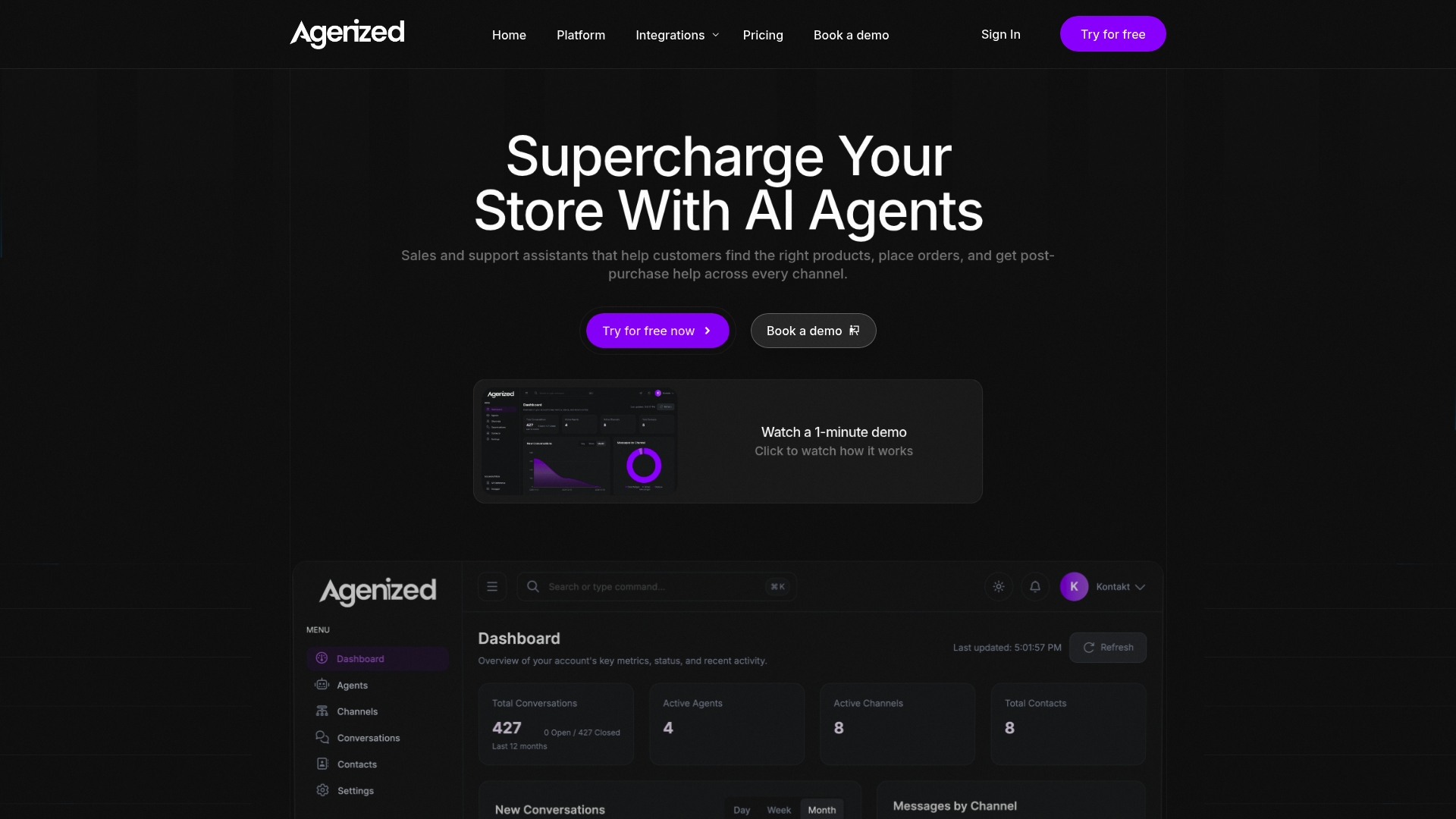
Access step-by-step AI agent workflows that guide you through setup, optimization, and scaling. These proven frameworks eliminate guesswork and accelerate time to value.
Multi-channel AI support solutions connect your store with customers across WhatsApp, Instagram, and website chat from a single unified platform. This integration streamlines management while expanding your support reach effectively.
Frequently asked questions
What criteria should I prioritize when selecting an AI chatbot for my e-commerce store?
Prioritize response speed and 24/7 availability first, as these directly impact customer satisfaction. Next, evaluate customization capabilities to match your brand voice and handle product-specific queries. Platform integration ease, multi-channel support, and GDPR compliance round out the essential criteria for informed selection.
How can human agents effectively collaborate with AI chatbots?
Set clear escalation triggers based on complexity, sentiment, and inquiry type to route appropriate conversations to humans. Ensure smooth handoffs that preserve conversation history and customer context, eliminating the need for customers to repeat information. Maintain human empathy and problem-solving for complex cases while letting AI handle routine inquiries efficiently.
What are the key GDPR compliance considerations for AI chatbots?
Implement data minimization by collecting only necessary information for each interaction. Provide transparent data usage policies and explicit consent mechanisms before gathering personal details. Include easy pathways for customers to request data deletion, exercise their right to be forgotten, and maintain encryption plus access controls to prevent breaches.
How do I measure the performance and ROI of AI chatbots?
Track customer satisfaction scores and net promoter scores to gauge service quality perception. Measure resolution rates showing how often chatbots successfully address needs without escalation. Monitor automation levels, average handling time, and support team productivity gains to calculate cost savings and validate your chatbot investment.